
AUDI
90 QUATTRO GTO
INDUCTED:
2026
AUDI 90 QUATTRO
By H.A. Branham
Two-hundred, thirty-one days. That’s all it took.
And as far as the rest of the IMSA GTO teams were concerned in 1989, that was enough. The Audi 90 Quattro had overstayed its welcome quickly, with an eight-month dominance based on all-wheel drive and an all-star driver lineup. Audi moved its program to the German-based DTM Series after ’89 -- good news for the GTO garage.
One of the most technically advanced cars in IMSA history, the Quattros won seven races amid 16 podium finishes in 1989, with two human IMSA Hall of Fame inductees -- Hans-Joachim Stuck and Hurley Haywood -- as main drivers, with the odd one-off assists from Scott Goodyear and Audi rally legend Walter Röhrl.
Those Quattros weren’t the fastest.
They weren’t the sleekest.
But they were the best in 1989 by far, as talent and technology combined, like perhaps never before in production-based sports car racing
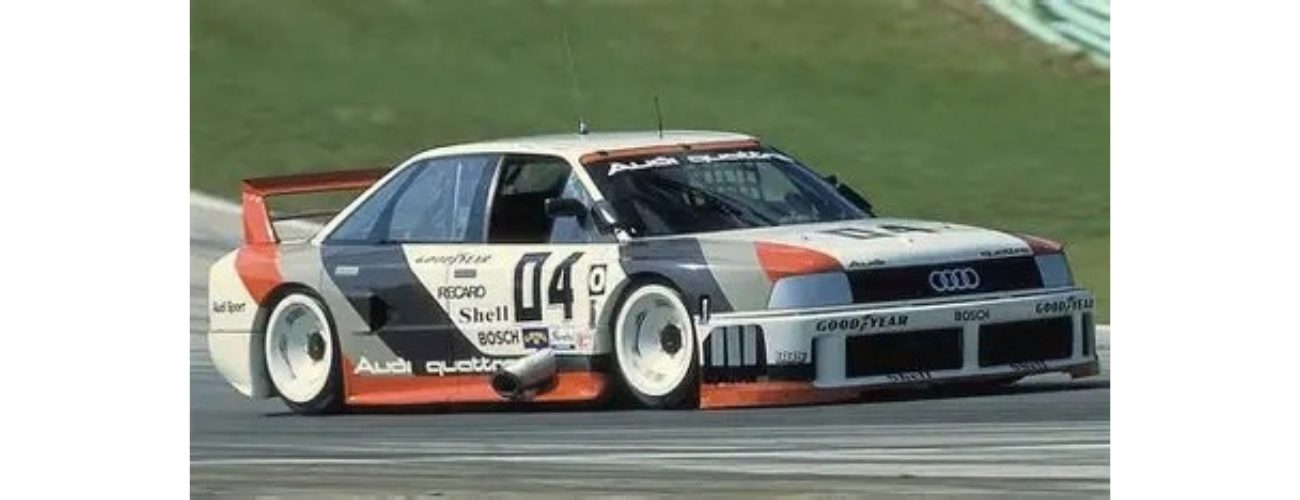
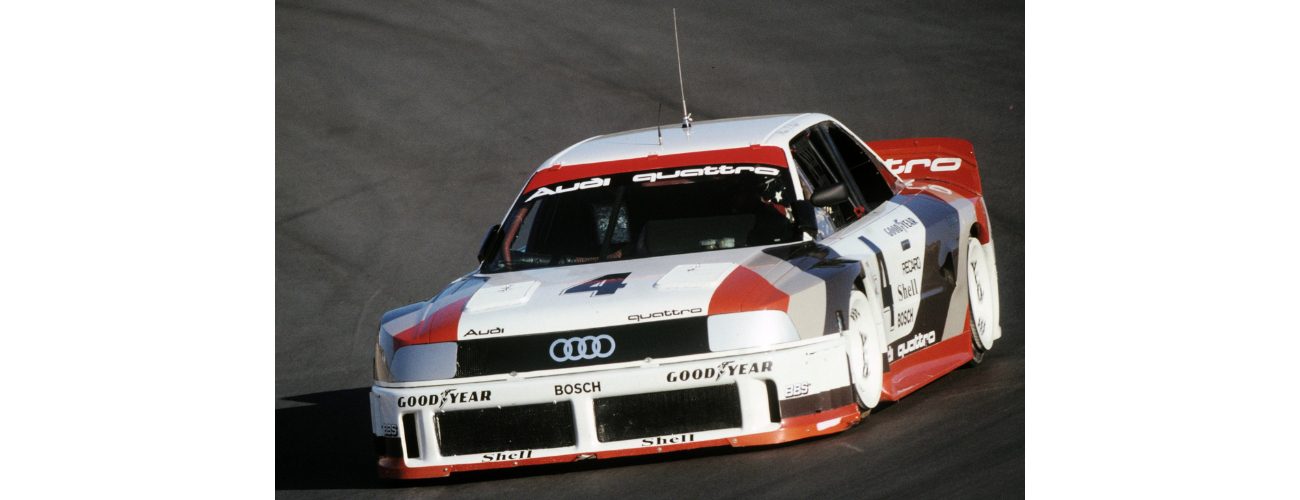
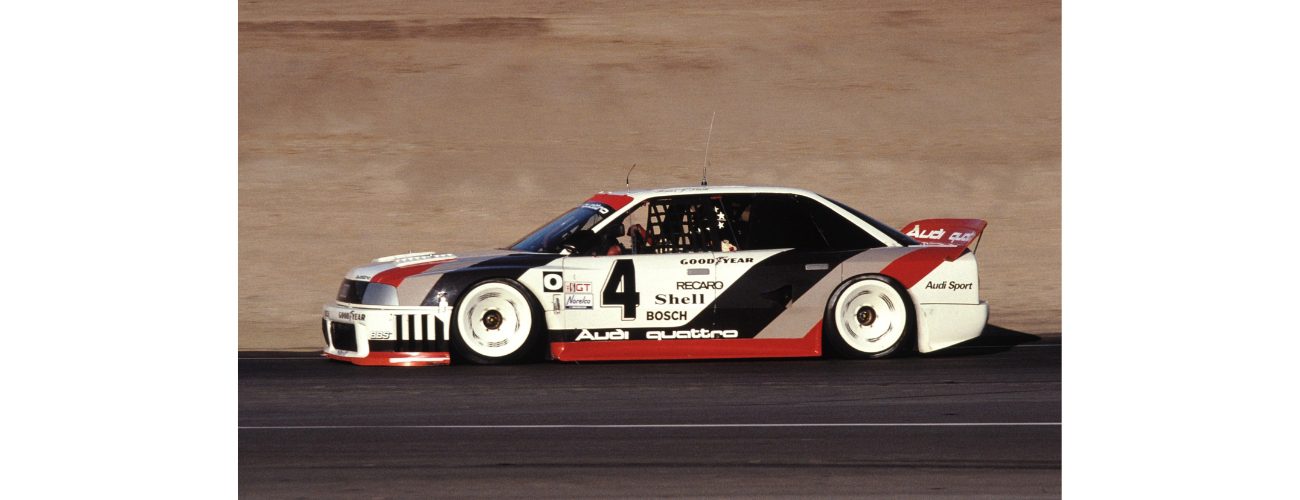
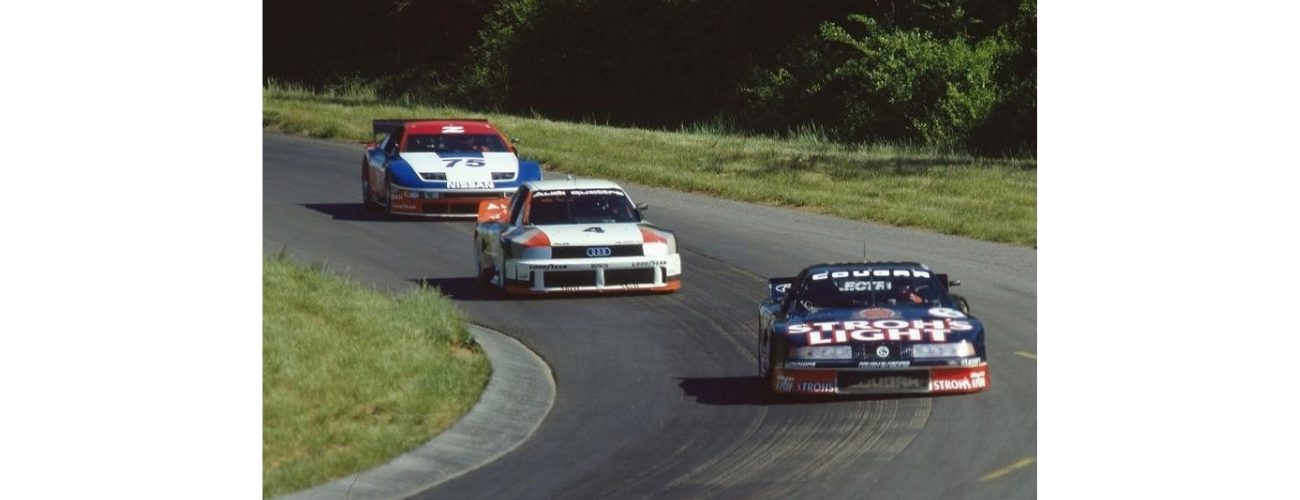
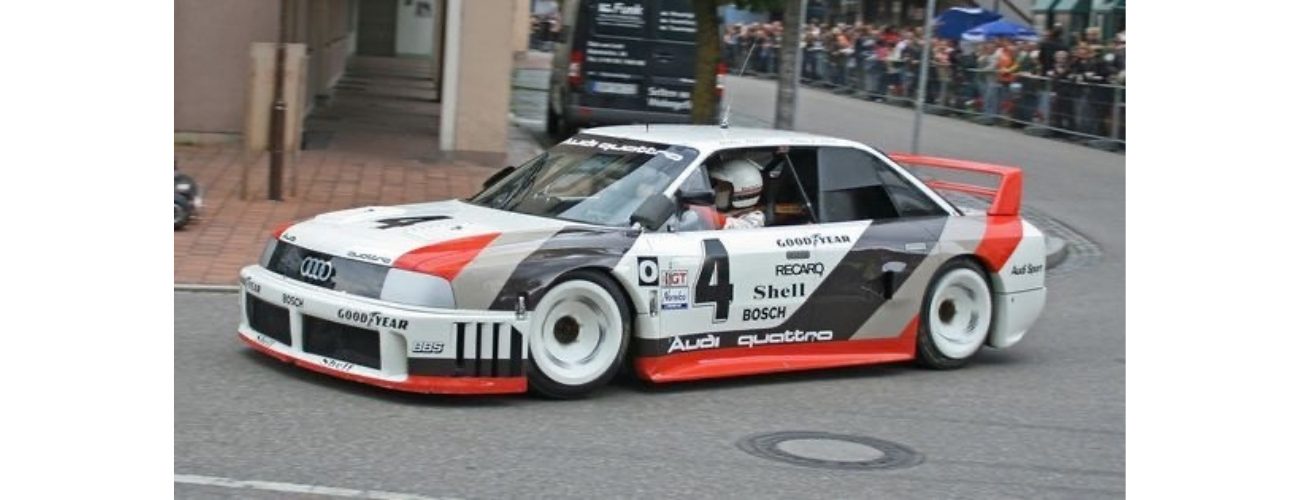
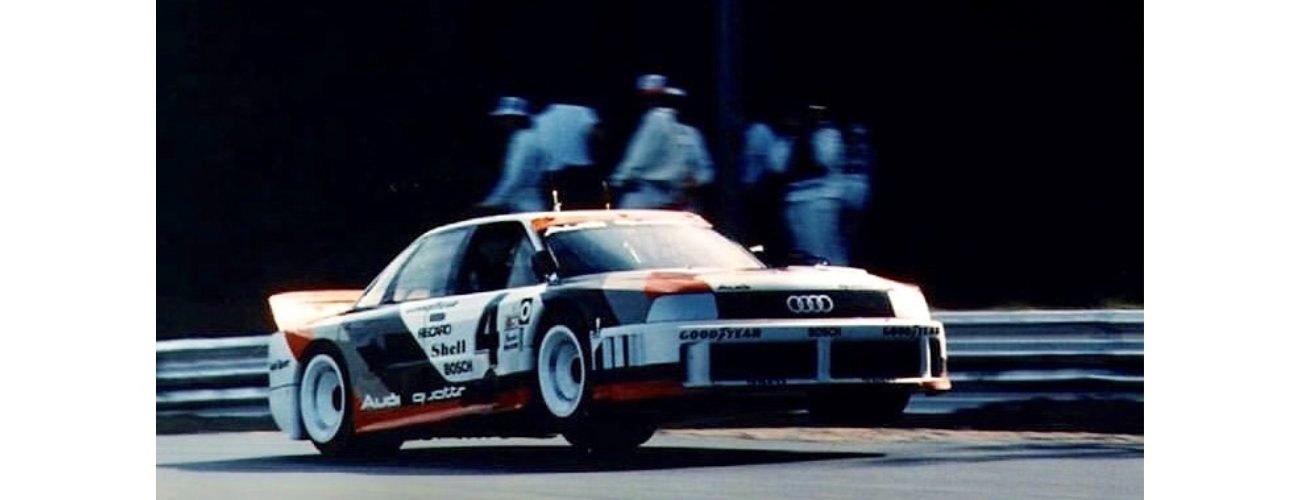
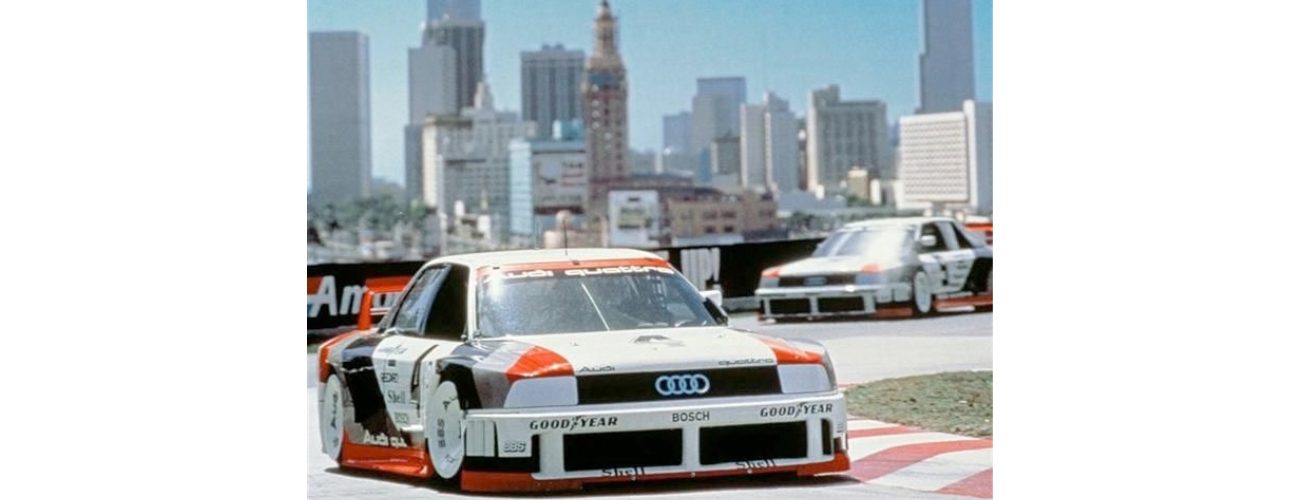
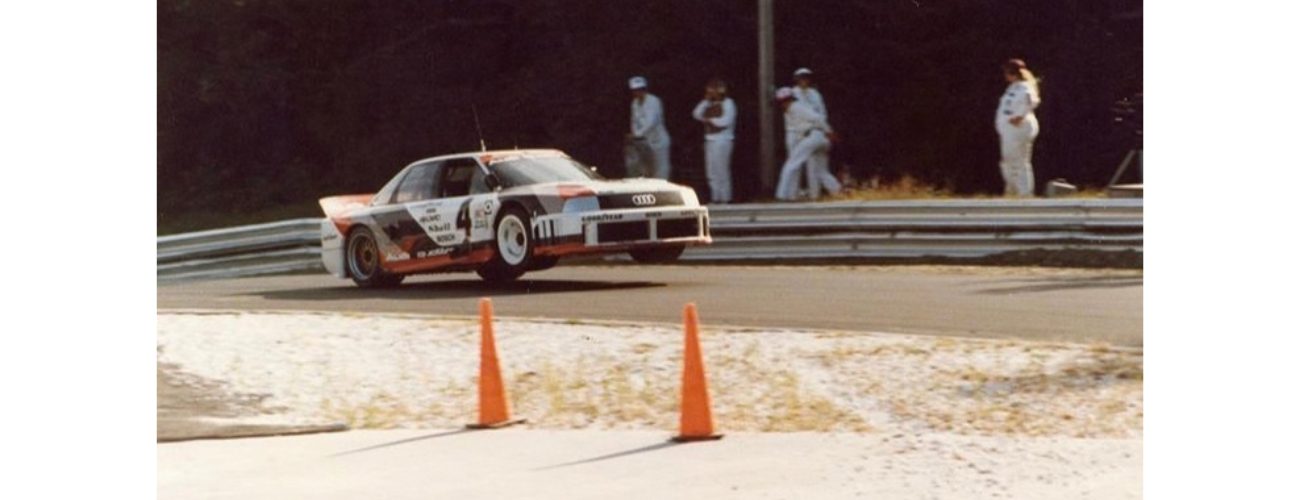
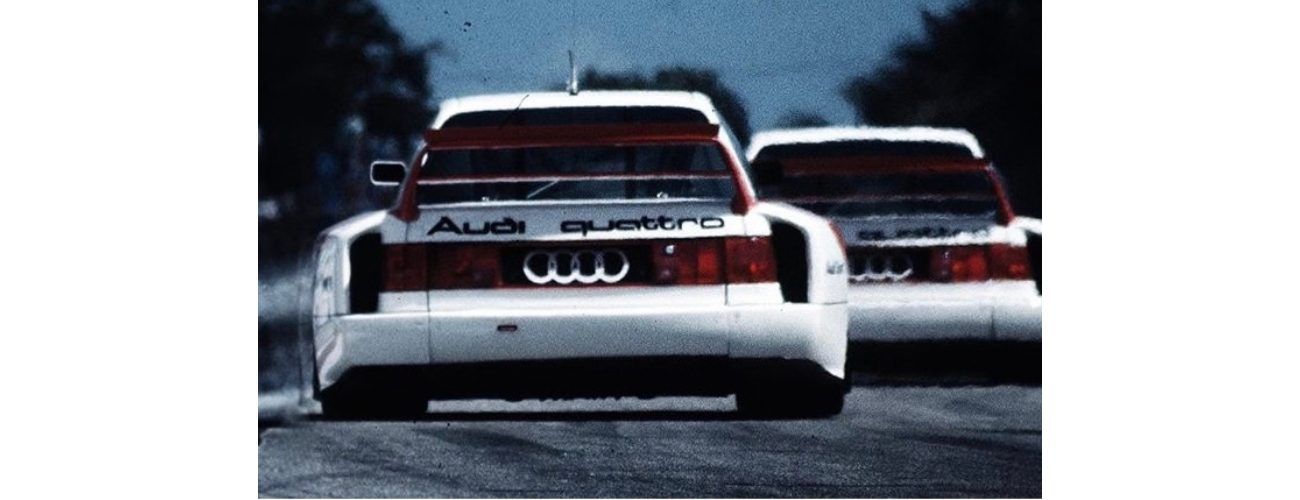
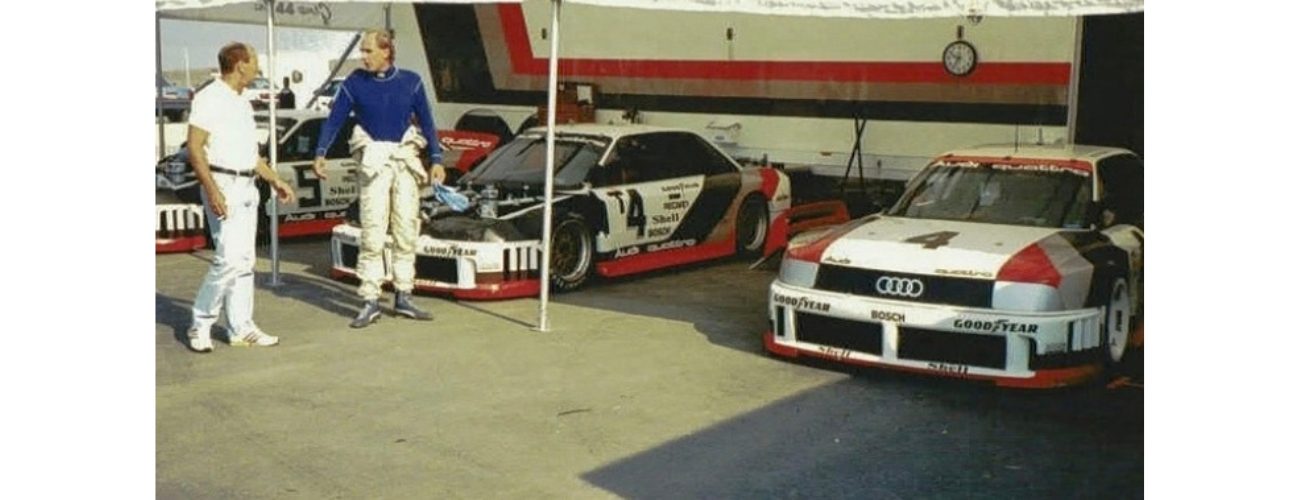
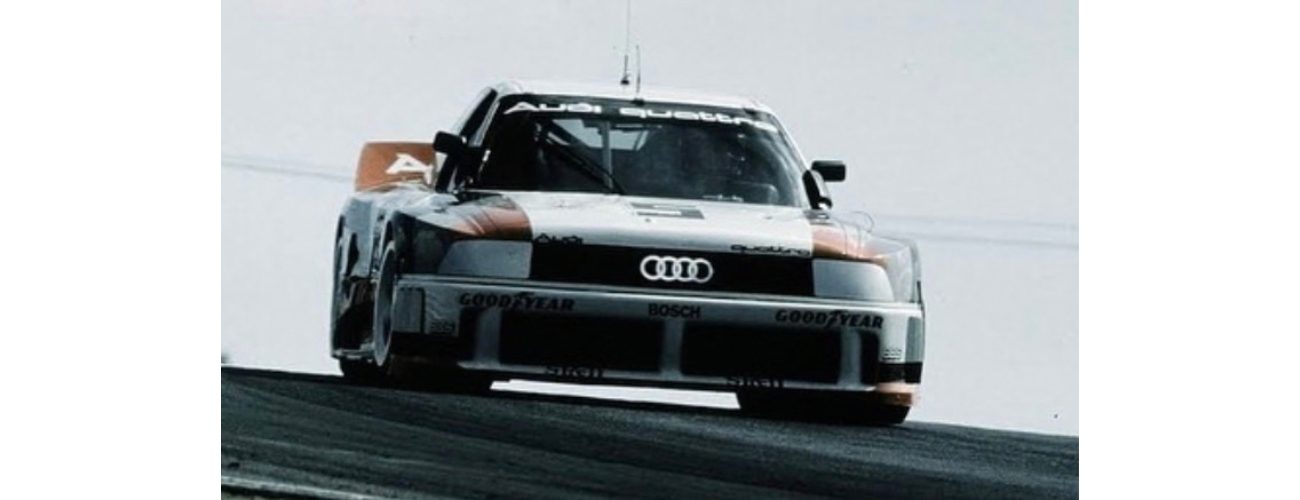
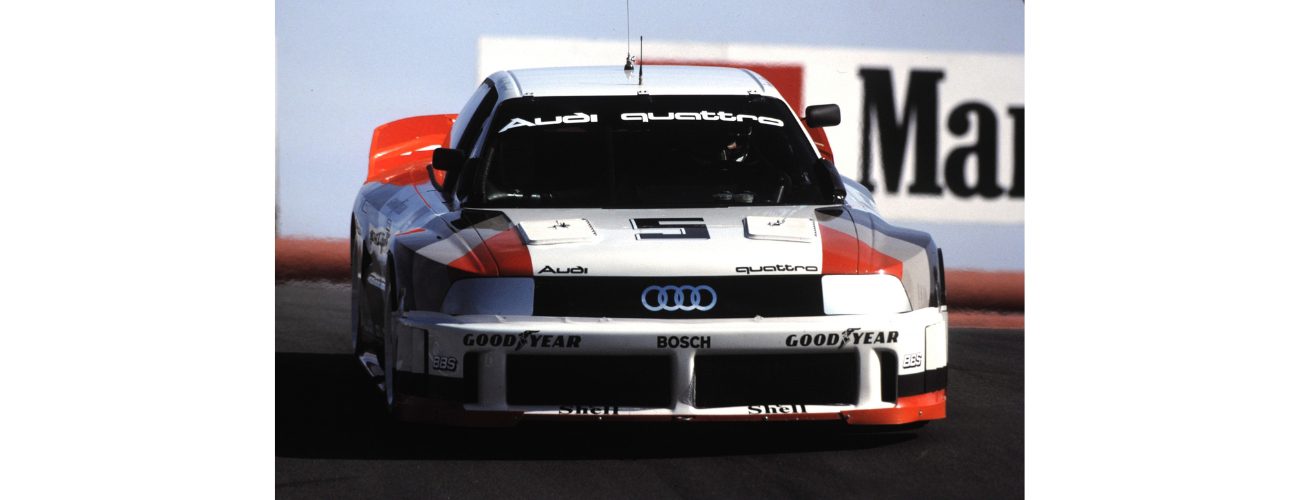
The white, orange, gray and black paint scheme was understated but nonetheless ominous, especially when the scheme loomed in your rear-view mirror on a twisting, turning road (or street) course, where all-wheel drive ruled.
The mirror said it all. You knew what was coming. The 90 Quattro prowled as much as it raced.
“I mean, they were just driving around people,” recalled Mark Raffauf, IMSA’s Senior Director of Race Operations, “and they were doing that on pieces of pavement that rarely got used. They lost the GTO championship only because they didn’t run at Daytona and Sebring. Roush Racing (with Mercury Cougars) won the title, but they sort of backed into it.”
Audi 200 Quattros, fielded by Bob Tullius’ Group 44 team, gave IMSA a pillaging preview in 1988, winning eight of 13 events in the SCCA Trans-Am Series. Haywood -- who said competitors “laughed” at the 200 when the season began, due to its relatively basic, showroom style and its relatively underpowered 5-cylinder engine -- won the driving championship. Audi won the manufacturer title and the SCCA stopped the contest moving forward, banning the all-wheel assault from future competition.
Just as well. The 200 Quattro, via its all-wheel drive, had achieved that weird sort of competitive nirvana that one can reach, via what Mark Donohue once labeled “the unfair advantage.” Sort of like committing a crime and getting away with it. The SCCA reacted with rule changes. Didn’t work.
In 1990, the 90 Quattro was an all-new car fielded by Audi of America that moved past the sedan style of the 200, with IMSA loosening restrictions during the construction process. But unlike the SCCA display, this time there would be no surprises. IMSA had the car built in advance, aiming to see just what kind of machine the 90 could be, if built properly.
It was built with this: A 20-valve, 2.2-litre five-cylinder engine … new tubular steel frame … turbo-charged horsepower approximately 720, and, of course, Audi all-wheel drive which brought it all home -- often to Victory Lane. And don’t forget the legendary turbo “chirp” the engine would emit. Fans of those days sure don’t.
Said Raffauf: “It was a monster. It had everything. And it also had the slipperiest looking taxicab body you ever saw … being a real race car built from the ground up as one, that made it a completely different animal.”
IMSA officials chased the Quattro in GTO throughout the season, addressing tires, weight, intake, you name it … but the effects were minimal, similar to 1988 and the SCCA.
The 90 Quattros passed on the Rolex 24 At Daytona and the Mobil 1 Twelve Hours of Sebring; no way were the new cars ready for the endurance tests. Then, the debut at the Miami Grand Prix soured due to gearbox woes for Stuck and an accident for Haywood.
Mechanical issues addressed, the 90 Quattros then laid it on thick.
- Stuck and Haywood finished one-two five times -- Summit Point; Topeka, Sears Point, Watkins Glen and Laguna Seca.
- Stuck won two other races -- Mid-Ohio and Lime Rock.
- Stuck finished third in the GTO championship standings, Haywood fourth. Two less races, remember.
Shades of NCAA basketball -- one and done: That’s how the Audi factory executives played it and who could argue? Continuing what they viewed as the Quattro’s evolvement, the program was moved to the spectacular German-based DTM Series.
“[Audi] proved what they wanted to do,’’ Haywood told the Break/Fix Podcast in early 2026. “[The 90 Quattro] was one of the best race cars I ever drove.”
The Audi 90 Quattro’s spectacular legacy of ’89 was left behind, on the surface. But the legacy lives.
"When we came to the States with this car," Stuck said years later, “nobody can believe what we can achieve… small engine, five cylinders, it’s a German saloon car! [But] we could use a later braking point, and practically any line we wanted [on any track].”
Raffauf explains the 90 Quattro’s impact in a broader context, making the car’s brief appearance even more notable.
“The best way to describe it,” he said, “is that nothing Audi ever did on pavement [racing] would have happened without that car, as it embodied all of Audi’s technology.”
Photo Gallery
More Galleries
AUDI 90 QUATTRO GTO