MAZDA
RX-3
INDUCTED:
2026
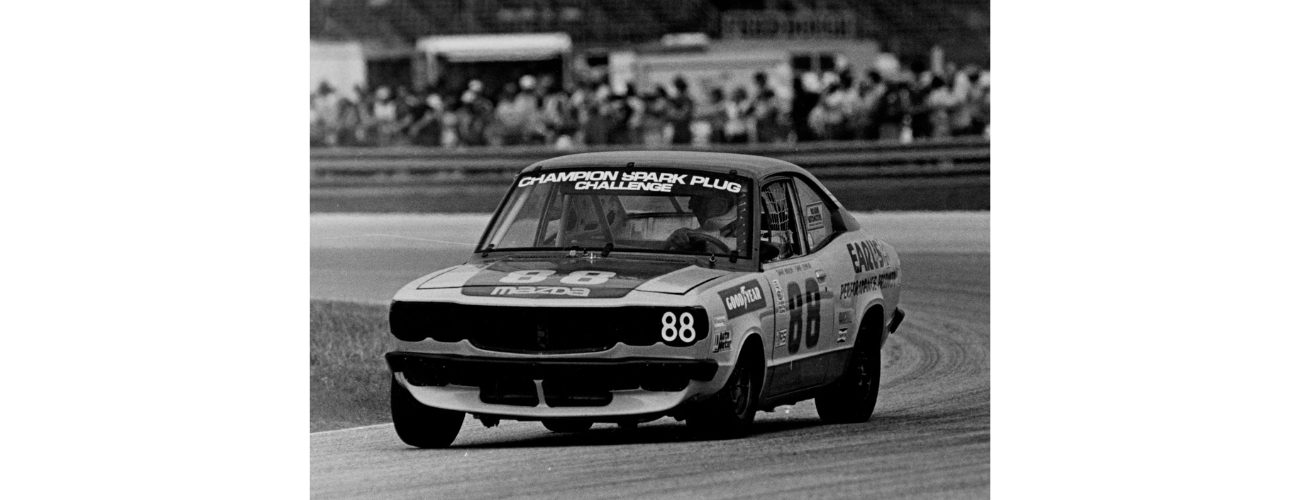
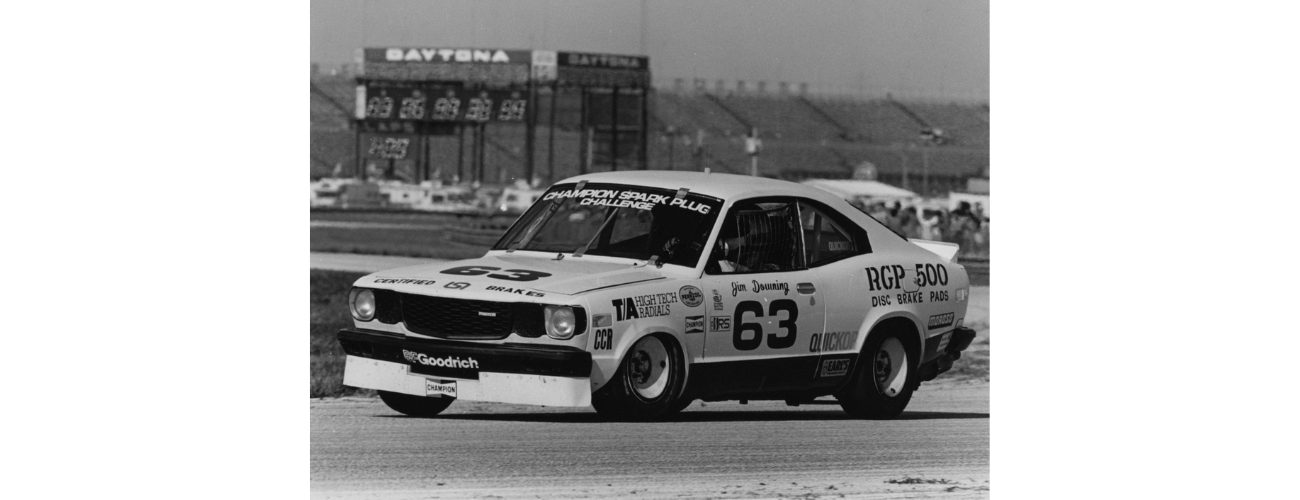
MAZDA RX-3
By H.A. Branham
A great little car that played a huge role in the establishment of IMSA, the Mazda RX-3’s 2026 inclusion into the IMSA Hall of Fame represents a core principle of the sanctioning body that lived and breathed in the heart and soul of IMSA co-founder and longtime leader John Bishop. He wanted a racing organization for anyone and everyone to compete if they had the desire and, of course, the dollars.
The beauty was not everyone had to have the same amount of dollars. Or horsepower. Or technology. IMSA had you covered. And vice versa. Rules were simple, the rulebook was small. That equaled accessibility -- and participation.
Bishop coined a phrase from the outset: “Racing with a Difference.”
The high-revving, ear-splitting, Rotary-powered Mazda RX-3 made a difference.
This HOF announcement was different, as IMSA stepped beyond its marquee classes, although the RX-3 did post five podium finishes in 61 IMSA GT starts from 1984-87.
The car’s real worth lies as the catalyst for the enormous popularity of the IMSA RS (Radial Sedan) competition. This was originally called the Baby Grand Series, with subcompact economy cars. Something for everyone.
“My father was always [working with both] the factory efforts and the guys who could build competitive cars in their garages and come to the races,” said author and historian Mitch Bishop (John’s son). “Most of the RS Series was the latter.”
Let’s break some results down.
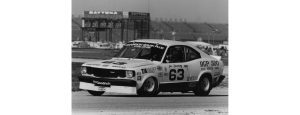
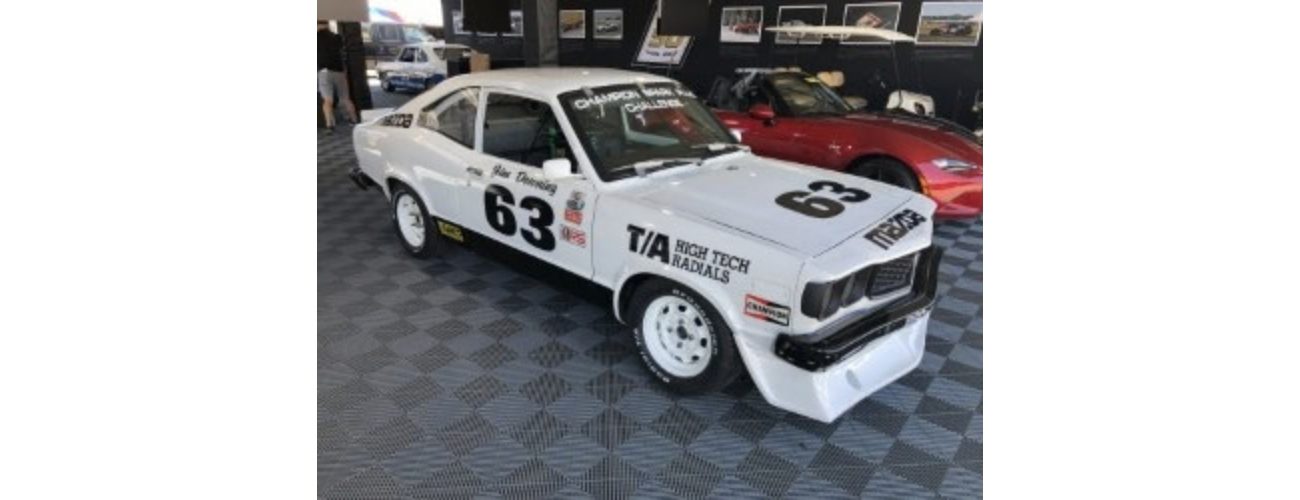
Of those five GT podiums, the 1975 Rolex 24 At Daytona stands as the highlight. Americans Ray Walle and Tom Reddy, driving the No. 90 RX-3, finished third in the GTU class (for cars with engines under 2.5 liters displacement) and a decent 14th overall. And at the ’78 Rolex 24, Mazda had its first factory-backed entries with two RX-3s. In GTU, the RX-3 wasn’t as much about top 10s as it was data. Limited success aside, that data led directly to the Mazda RX-7’s eventual domination of GTU with drivers like three-time champion Tommy Kendall.
“The RX-3’s appeal was layered: its relative speed in terms of power to weight, easy availability of used cars/parts and the endurance/low maintenance cost of the 12B rotary engine, a two-rotor,” said motorsports journalist Jonathan Ingram.
“For a guy who wanted to find a way to keep racing [within a tight budget], the RS series and a Mazda RX-3 were a perfect fit. It required an engine builder, a chief mechanic and volunteer help on the weekends to run the team.”
The IMSA RS Championship had three entitlement sponsors during its 1979-84 run, resulting in the Goodrich Radial Challenge, the Goodyear Radial Challenge and the Champion Spark Plus Challenge -- collectively, the forerunner for today’s IMSA Michelin Pilot Challenge, one of two Challenge championships in IMSA and which runs on most IMSA WeatherTech SportsCar Championship weekends.
No matter the sponsor, Mazda RX-3s ruled the RS scene. Absurdly so, winning four consecutive manufacturers titles from 1979-82. During that span three guys won the driving title -- Roger Mandeville (1979), Jim Downing (1981) and Chuck Ulinski (1982). Mandeville is also part of the 2026 IMSA Hall of Fame class, while Downing was inducted in 2024.
As always in production-based racing, there were real-world business implications operating concurrent to checkered flags. Competition translated to increased brand awareness, causing more consumers to reconsider this weird rotary thing, after all.
And that helped Mazda to become more widely known for both its race and passenger cars.
The RX-3 in IMSA, “was super important, particularly to Mazda,” said Mitch Bishop. “They wanted to break into the U.S. market and they had something unique with the rotary engine, so they decided to go racing with the rotary and prove that it was not only fast but reliable.
“The RX-3 became very potent.”
Photo Gallery
More Galleries
MAZDA RX-3